

Most families planning a funeral in Australia have never done it before. They're doing it under time pressure, during grief, with very little chance to compare options. That combination is how you end up with an $11,000 bill for what you assumed would be "simple".
This guide breaks down what a funeral actually costs in Australia in 2026. It covers cremation, burial, and every line item in between, and explains what's driving prices higher each year. The figures come from the Australian Government's Moneysmart consumer guide, the Australian Seniors Cost of Death 2.0 Report, the ACCC's funeral services sector report, and FY2025/26 gazetted prices published directly by Victoria's cemetery trusts. Nothing here comes from a comparison site trying to sell you a package.
What a funeral costs in Australia in 2026
Funeral pricing is not standardised. Two families arranging the same service type in the same city can end up with quotes that differ by thousands, depending on which funeral director they walked into and which "package" they were shown first.
Before looking at the numbers, one important clarification. When you arrange a burial or cremation in Australia, you usually pay two separate invoices.
- Funeral director fees, which cover the coffin, body preparation, transport, paperwork, hearse, ceremony coordination, and celebrant if used. These are charged by the funeral home.
- Cemetery or crematorium fees, which cover the plot (formally called the Right of Interment), the burial or cremation itself, plaque and memorial, and chapel hire if used. These are charged by the cemetery trust.
Some funeral directors quote a "package" that rolls both together. That's convenient, but it can hide which charges are going where, and it sometimes inflates cemetery fees above what the trust actually gazettes. Getting a clear split between the two is the first step to understanding what you're paying for.
The Australian Government's Moneysmart site puts the overall total range at $4,000 for a basic cremation through to around $15,000 for a more elaborate burial. That range still holds in 2026, though the top end has crept higher, especially in metropolitan Melbourne and Sydney where land pressure continues to push premium burials well above it.
Here's the realistic picture of total combined costs (funeral director fees plus cemetery fees):
| Service type | Typical total cost in 2026 | Notes |
|---|---|---|
| Direct cremation (no service) | $2,000 to $4,000 | Lowest-cost option. Ashes returned to family. |
| Attended cremation with service | $6,000 to $9,000 | Includes director, venue, coffin, ceremony |
| Average Australian cremation | $8,045 | Cost of Death Report 2.0, 2023 data |
| Average Australian burial | $11,039 | Cost of Death Report 2.0, 2023 data |
| Full Melbourne burial (all-in) | $15,000 to $30,000+ | Plot, headstone, director, catering |
Australia's overall funeral average sits in the $8,000 to $9,000 range, but that figure hides enormous variation. Burials in metropolitan Sydney, Melbourne, and the ACT comfortably exceed $19,000 once the plot, headstone, director fees, and catering are counted.
The Australian Seniors Cost of Death 2.0 Report found that roughly one in three people who paid for a funeral experienced financial hardship afterwards, and two-thirds of those said it took months to recover.
Every cost component, explained
Funeral quotes usually arrive as a list of line items rather than a single total. The ACCC has repeatedly flagged this as a transparency problem in the industry, noting that families often don't see the real number until everything has been selected. Here is every component you'll encounter, what it covers, and whether you legally need it.
| Cost | Typical range | Required? |
|---|---|---|
| Funeral director fees | $3,000 to $6,000 | Only if you use one |
| Coffin or casket | $800 to $10,000+ | Yes (average ~$2,800) |
| Cremation fee | $600 to $1,500 | Yes, if cremating |
| Burial plot | $1,800 to $14,000+ | Yes, for burial |
| Cemetery opening and closing | ~$1,150 | Yes, for burial |
| Headstone or monument | $800 to $12,000+ | No |
| Celebrant or clergy | $250 to $660 | No |
| Flowers | $200 to $500 | No |
| Catering and wake | $500 to $3,000+ | No |
The director's fee is usually the single largest component. It covers transfer of the body, paperwork, coordination of the ceremony, and body preparation. Families who hold their own service (legal in Victoria) can remove this entirely, though most prefer professional support at such a difficult time.
The coffin is where the industry makes a large share of its margin. A cardboard or MDF coffin is fully sufficient for a direct cremation, so upgrading a coffin that is about to be cremated adds cost without adding any lasting benefit.
Your rights under Australian Consumer Law. You are entitled to an itemised written quote before engaging any funeral director. The ACCC has pursued providers for labelling optional fees as mandatory and for misleading "from" prices. In 2024, Victoria passed legislation requiring funeral providers to display full price lists publicly, both on their websites and at their premises, with Consumer Affairs Victoria enforcing it.
Always ask for the full quote in writing, confirm GST is included, and ask directly which items are legally required versus optional. If a provider can't or won't give you this, that is your signal to walk.
Why Melbourne is different (and expensive)

Burial costs vary more between Australian states than most families expect. The ACT sits at the top around $20,000 on average, with metropolitan Sydney and Melbourne following closely. Regional Victoria, by comparison, comes in close to half that.
The main driver is land. Melbourne's metropolitan cemeteries are running out of it. The Greater Metropolitan Cemeteries Trust (GMCT) manages 21 cemeteries across Melbourne's north, east, and west, and has confirmed publicly that future cemeteries will need to be built further from the CBD as inner-city land is exhausted. In the south and south-east, which is the side of Melbourne most relevant to Mornington Peninsula and bayside families, cemeteries are administered by the Southern Metropolitan Cemeteries Trust (SMCT). SMCT operates 11 sites including Bunurong Memorial Park, Springvale Botanical Cemetery, and Melbourne General.
Victorian cemetery prices are set by the State Government under the Cemeteries and Crematoria Act 2003. Every fee of $50 or more rises annually in line with CPI. On 1 July 2025, prices across GMCT and SMCT rose by the government-set 2.5% for the FY2025/26 period, and another increase is built in for 1 July 2026. This isn't inflation lag; it's structural. A plot that's $13,000 today will be more expensive next year, and more again the year after.
What a burial actually costs near Mornington Peninsula
For families in the south-east, Bunurong Memorial Park in Dandenong South is the closest major trust cemetery. The table below shows the cemetery fees only (Right of Interment plus selection fee) from SMCT's gazetted FY2025/26 fee list, effective 1 July 2025 to 30 June 2026. These are not total burial costs. They are the cemetery portion that sits separately from whatever your funeral director charges.
| Bunurong Memorial Park option | 2025/26 cemetery fee (ROI + selection) |
|---|---|
| Lawn grave with beam (Eternity) | $5,695 |
| Monumental grave (Serenity, dual row) | $8,790 |
| Natural burial grave (Murrun Naroon) | $9,705 |
| Headstone lawn grave (Sienna Garden Lakeside, single) | $13,535 |
| Headstone lawn grave (Rock, single width) | $16,155 |
| Lawn grave with shared tree package (The Glades, includes 2 interments + plaques) | $21,350 |
| Cremation niche (single) | $6,950 to $11,410 |
What the cemetery fee above does not include is the interment fee on the day of burial (which varies by package), a plaque or headstone unless bundled (as with The Glades package), the funeral director's fee, the coffin or casket, and the celebrant, flowers, and catering.
A realistic total: what a middle-range Bunurong burial actually costs
Here's how the numbers add up for a family choosing an Eternity lawn grave with beam at Bunurong.
| Line item | Typical 2026 cost |
|---|---|
| Cemetery Right of Interment (Eternity lawn grave with beam) | $5,695 |
| Interment fee (weekday, standard) | $2,300 to $2,700 |
| Plaque and installation | $1,500 to $3,200 |
| Funeral director fees (transfer, body prep, coordination) | $3,500 to $5,500 |
| Coffin | $1,500 to $3,500 |
| Celebrant, flowers, printing | $800 to $1,500 |
| Catering and wake | $500 to $2,500 |
| Total | $15,800 to $24,600 |
For a premium option, such as a Rock headstone lawn grave (with a $16,155 cemetery fee) combined with a more elaborate service, the total realistically lands between $28,000 and $35,000.
Families looking for lower-cost local options sometimes consider Frankston Memorial Park or the four small council cemeteries at Mornington, Dromana, Flinders, and Tyabb under the Mornington Peninsula Cemeteries Trust. These are generally cheaper on the cemetery side (Frankston currently charges around $5,055 for an at-need gravesite and $2,635 for interment), but availability is very limited and pre-purchase isn't always possible.
One practical tip
Families who pre-purchase a burial plot directly from a cemetery trust, rather than through a funeral director, lock in today's price before the next CPI increase on 1 July. Right of Interment fees are also GST-exempt when purchased directly from the trust under Division 81 of the GST Act. For anyone considering a Melbourne metropolitan burial, buying the plot in advance, directly from SMCT or GMCT, is usually the single most effective way to reduce cost.
Nationally, around two-thirds of Australians now choose cremation over burial. In capital cities the rate is even higher, largely because the cost of a plot has become prohibitive for many families.
What's driving costs higher
Four forces are compounding Australian funeral costs upward, and none of them are reversing.
1. Metropolitan land scarcity
Melbourne burial plot prices have roughly tripled over the past decade in some cemeteries, and regulated annual CPI increases add to that year on year. Both SMCT and GMCT confirmed FY2025/26 increases of 2.5% on 1 July 2025.
2. Industry consolidation
Australia's funeral sector is worth around $2 billion and is increasingly dominated by a small number of corporate operators. Less competition tends to mean less pricing pressure on consumers.
3. Cremation revenue shift
As more families choose cremation, which generates less revenue than burial, many funeral providers have restructured their pricing around premium coffins, attended-service packages, and catering upsells. Arrangements families expected to be simple and affordable often turn out to be neither.
4. Pricing opacity
The ACCC's 2021 sector report identified six separate areas where funeral businesses were misleading consumers on price. About 44% of Australians don't know what a funeral costs until they arrange one, and under time pressure and grief, most families aren't in a position to negotiate.
Victoria's new pricing transparency law is a genuine step forward. Since it took effect, funeral providers are required to display complete price lists on their websites and at their premises, enforced by Consumer Affairs Victoria. But the underlying forces of land, consolidation, and regulated annual increases will continue to push prices up for the foreseeable future.
5 things most funeral cost guides won't tell you

1. You are legally entitled to an itemised quote
Under Australian Consumer Law, funeral providers must give you a written quote that breaks down every cost, identifies what is legally required versus optional, and includes GST. If you're handed a single bundled package price, you can (and should) ask for the breakdown. Many families never know to ask.
2. The real long-term cost of a traditional burial
The upfront quote a family gets for a traditional burial usually combines funeral director fees and cemetery fees into one number, and that number is only half the story. For a middle-range Bunurong burial, the initial outlay lands between $15,000 and $25,000 when cemetery, director, and everything else is counted. For a headstone grave like the Sienna Lakeside option, it's higher. On top of that first payment, some families later face plaque refinishing, memorial updates, and ongoing maintenance responsibilities for the grave itself, because Victorian trusts hold memorial holders responsible for keeping their memorial in safe condition. Over 20 or 30 years, the total picture is often substantially more than what appears on the original quote.
A Living Legacy Tree at Mornington Green has no ongoing costs after the initial payment. By securely reserving 20% of all sales in an independently managed ongoing care and maintenance fund, Mornington Green guarantees the perpetual financial resources needed to maintain and protect your legacy tree for generations.
3. Direct cremation doesn't create a place
Direct cremation is the most affordable option. Often it's the right one, and it's increasingly popular. What it doesn't do is create a place. Ashes are returned to the family with no fixed location and no ceremony built in.
Many families who choose it purely for cost reasons find, months later, that the absence of somewhere specific to return to is harder than they expected. Grief researchers consistently note that having a fixed place you can visit, one that's yours, supports long-term healing. This isn't an argument against direct cremation. It's an argument for thinking ahead about what comes after it.
4. Funeral debt lands on top of grief
The Australian Seniors research found about a third of families paying for a funeral experience financial hardship as a result, and most take six months or longer to recover. That means families are carrying funeral debt and grief at the same time, which is the worst possible combination.
Pre-planning removes this entirely. That can mean a prepaid funeral plan, a funeral bond, or selecting a memorial tree during the person's lifetime. Whatever the path, taking it off the family's plate before it's needed is the single kindest thing most people never get around to doing.
5. Victorian cemetery pricing is regulated, and you can use that
Every cemetery fee over $50 at a public Victorian cemetery is government-gazetted and rises by CPI each 1 July. For FY2025/26 the increase was 2.5% across SMCT and GMCT. Another increase is built in for 1 July 2026. Pre-purchasing directly from a cemetery trust locks in today's price, and Right of Interment fees are GST-exempt when purchased this way.
Going through a funeral director typically adds both GST and an administration fee. If you're planning a Melbourne metropolitan burial, this one decision can save several thousand dollars.
Read more: Memorial Service vs Celebration of Life: Which Is Right for You?
An alternative that creates something lasting

For families drawn to direct cremation because of cost, the hardest question is always the same. What happens to the ashes, and is there somewhere to return to?
A cemetery plot solves the second problem but costs $13,000 to $21,000 in cemetery fees alone for a mid-range option at Bunurong Memorial Park, and that's before any funeral director costs, coffin, or service are added. Keeping ashes at home is legal in Victoria, but not a decision that suits every family. Scattering untreated ashes causes real environmental harm because cremated remains are highly alkaline and can make soil inhospitable for years.
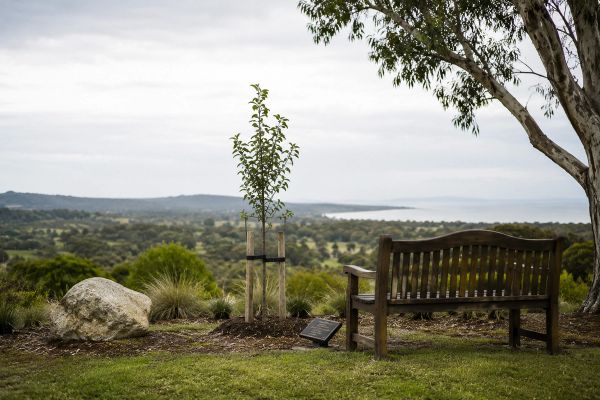
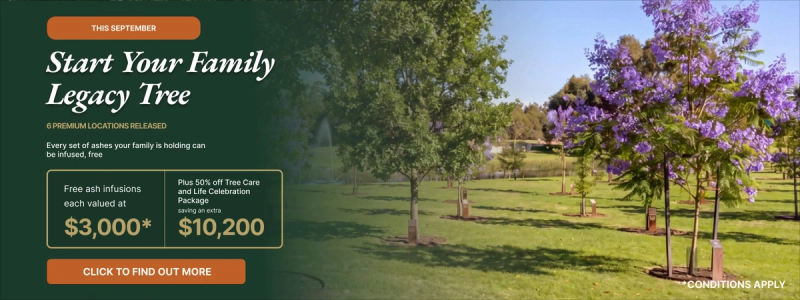
At Mornington Green Living Legacy Gardens offers a third path. The ashes are treated using the patented Living Legacy Formula, which neutralises their alkalinity and converts them into nutrients a living tree can absorb. A ceremony is held in the garden, and a bronze plaque is installed at the tree. The family has a specific tree, in a specific protected garden, that they can return to indefinitely. For picnics, for quiet visits, and for family gatherings across generations.
"I could not imagine going to a cemetery with a plaque on the ground to visit my son. Here, I can come with my chair, book, and coffee, and just sit and read. I do it every week." Wendy
Founders' packages start at $8,000 including GST, with no hidden fees and no ongoing costs. They cover ash treatment using the Living Legacy Formula, your choice of tree from the range of species grown at the garden, a planting ceremony in the garden with photography included, a custom memorial plaque at the tree, and perpetual care of the tree by the in-house team of certified horticulturists. If a tree ever dies, it's replaced at no cost to the family.
Payment plans are available, and families can choose to share a tree across multiple loved ones over time, building a true family legacy.
Pre-plan or at-need: two paths
Families come to Mornington Green in two ways.
Pre-planning means selecting a tree during the person's lifetime. The tree is newly planted at the time of selection and grows in the garden over the following years, with the ash infusion taking place after death. This pathway lets the individual visit, choose the species that feels right, and have the conversation with family calmly, without the pressure of a difficult week.
At-need trees are established specimens, some several metres tall, selected by the family after a death. Both pathways result in a permanent memorial in a protected garden. The difference is the size of the tree on the day the family chooses it.
For families looking further ahead, pre-planning fits naturally alongside broader end-of-life care such as palliative care, hospice, and advance care planning. Each decision made early is one less thing loved ones have to make under grief.
Financial support for families in hardship
If cost is the reason you're reading this, a few Victorian and federal supports may apply. Services Australia offers bereavement payments for eligible pensioners and Centrelink recipients. Bereavement Assistance Victoria is a not-for-profit funeral director for Victorians with limited or no funds, contactable on (03) 9564 7778 (24 hours).
WorkSafe Victoria offers up to $15,230 towards funeral costs for work-related deaths. TAC covers funeral costs for deaths resulting from road accidents, and VOCAT provides awards for families of victims of crime. Most superannuation funds can also release death benefits promptly.
Contact Services Australia as early as possible after a death, as many entitlements are time-sensitive.
Frequently asked questions
What is the average cost of a funeral in Australia in 2026? Around $8,000 to $9,000 across all service types, though this masks enormous variation. Direct cremation averages closer to $3,500, and full Melbourne metropolitan burials reach $15,000 to $30,000 or more once every element is included.
Is cremation cheaper than burial? Yes, substantially. The average cremation sits around $8,045 and the average burial is $11,039. Melbourne metro burial comfortably exceeds $15,000, often reaching $20,000 or more when plot, headstone, director, and catering are counted. The primary driver is the burial plot.
Why are Melbourne burial plots so expensive? Metropolitan land is finite, and Victorian cemetery prices rise annually by a government-set CPI percentage (2.5% on 1 July 2025 for FY2025/26, with another increase due 1 July 2026). Both SMCT and GMCT have publicly acknowledged that future cemeteries will be built further from the CBD as inner-city land runs out.
Can I lock in today's prices by pre-planning? Yes. Cemetery trusts, prepaid funeral plans, funeral bonds, and Living Legacy Trees at Mornington Green all let families secure today's pricing. Right of Interment fees are GST-exempt when pre-purchased directly from an SMCT or GMCT cemetery.
What does a Living Legacy Tree cost compared to a traditional funeral? A direct cremation combined with a small Living Legacy Tree typically totals $10,000 to $12,000. A full Melbourne metropolitan burial costs $15,000 to $30,000 or more once plot, headstone, director, and catering are added. Packages at Mornington Green start from $8,000 and include perpetual care with no ongoing fees.
Is direct cremation legal in Victoria? Yes. Direct cremation without a prior service is fully legal. The body is placed in an appropriate container (included in standard direct cremation packages). Families can hold a memorial service separately, in their own time, at any meaningful location.
Can I hold my own funeral service in Victoria? Yes. Under Victorian law families can hold their own ceremony, at home or at any meaningful location, without engaging a celebrant. Many families do a direct cremation followed by a private gathering in the weeks that follow.
Planning ahead changes everything
Funeral costs in Australia will continue to rise. Metropolitan land is finite, cemetery prices increase every year by regulated CPI, and most families make these decisions under real time pressure and grief. That's exactly when clear thinking is hardest.
Planning ahead removes the pressure. It gives you time to compare options, understand what's in a quoted price, and choose something that reflects what matters rather than whatever happens to be on offer in a difficult week.
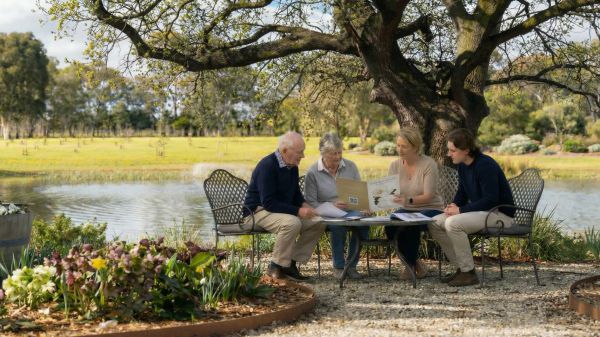
If a living memorial is worth exploring, our team can talk you through costs, tree selection, and the process during a garden visit, with no obligation. Download our brochure first to see tree species, packages, and pricing, or book a chat with a Legacy Planner from the comfort of home.
The garden is at 125 Tyabb-Tooradin Road, Somerville, approximately 50 minutes from Melbourne CBD on the Mornington Peninsula.
| Cost | Service | Product |
|---|---|---|
| Direct cremation (no service) | $2,000 to $4,000 | Lowest-cost option. Ashes returned to family. |
| Attended cremation with service | $6,000 to $9,000 | Includes director, venue, coffin, ceremony |