

Human composting is not legal anywhere in Australia as of 2026. There are no providers, no licensed facilities, and no approved trials. The closest options available right now are natural burial, aquamation (water cremation), and ash-infusion living tree memorials.
If you want to know why it is not legal, where it might happen first, or what you can do instead, this guide covers all of it.
What is human composting?
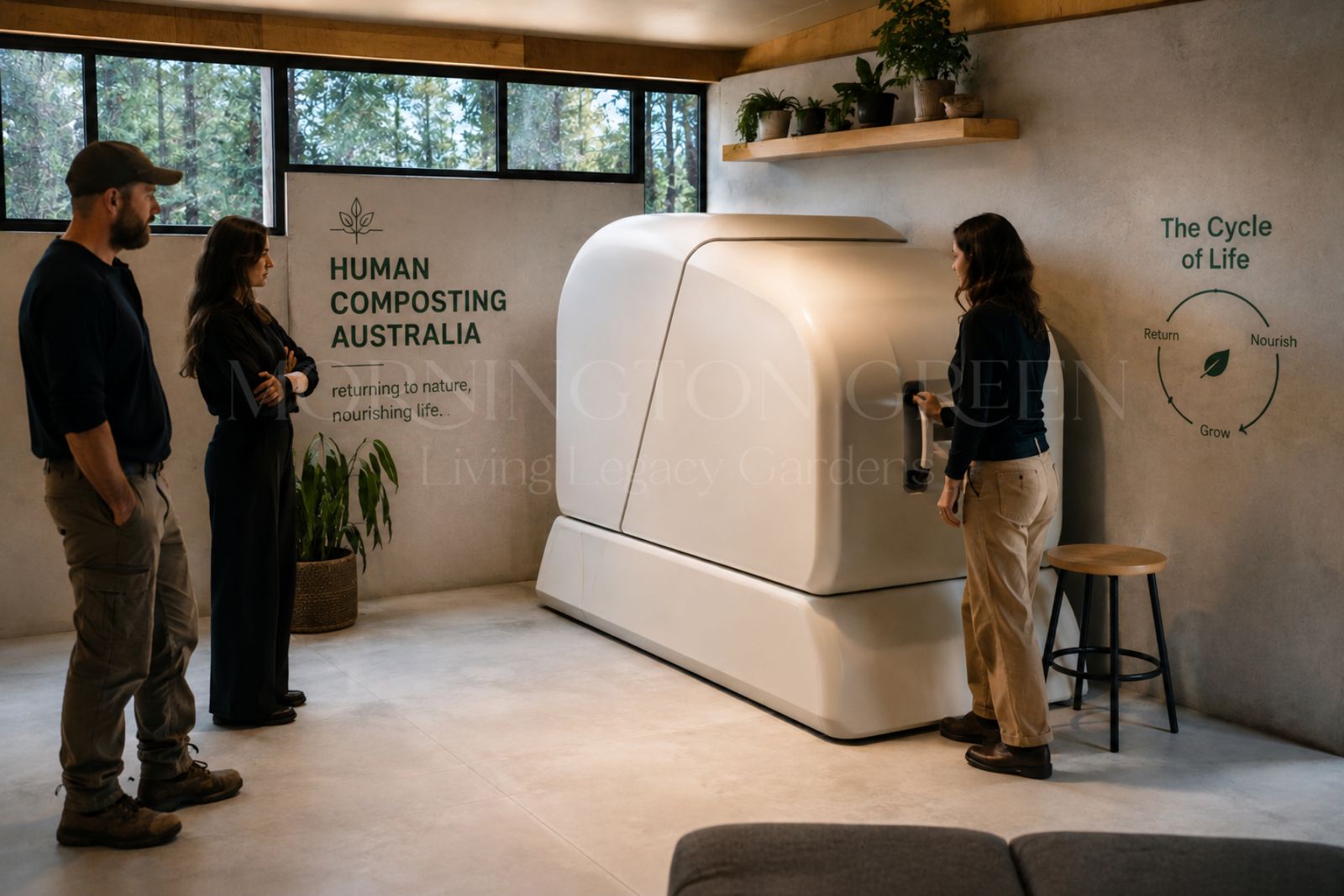
Human composting, formally called natural organic reduction (NOR), converts an unembalmed body into soil compost. Here is how the process works:
- An unembalmed body is placed in a sealed vessel with organic materials, typically wood chips, straw, and alfalfa.
- Microorganisms break the body down over 30 to 60 days.
- The resulting compost can be taken home by the family or donated to conservation land.
It was developed in the United States, where Washington State became the first jurisdiction to legalise it in 2019, followed by Colorado, Oregon, Vermont, California, New York, Arizona, Nevada, Minnesota, and Maryland.
Why is it not legal in Australia?
The problem is legal, not technical.
Every state and territory in Australia has burial legislation that lists the approved methods of disposition. According to the Victorian Law Reform Commission, the lawful options are:
- Burial in a licensed cemetery
- Cremation at a licensed crematorium
- Natural burial in a biodegradable coffin or shroud (where approved)
Natural organic reduction does not fit any of these categories. No state has yet amended its legislation to add it.
There is a second legal problem specific to NOR: the compost it produces would likely be classified as human remains under current Australian law. That creates a separate set of questions about what families could legally do with it, including whether they could take it home, spread it in a garden, or donate it to conservation land. None of these are currently addressed in any state's legislation.
Until a state parliament passes new legislation that defines NOR as an approved method and resolves the remains question, no facility can legally operate.
Which state might legalise it first?
1. NSW now has the most active legislation on the table
In June 2026, Independent Member for Sydney Alex Greenwich introduced a bill to NSW Parliament that would, for the first time, create a legal pathway for human composting in New South Wales. The bill would allow the state government to establish rules governing human composting facilities, processes, and oversight. It does not replace burial or cremation but adds a third option.
As reported by The Canberra Times, NSW Premier Chris Minns responded cautiously, indicating he would want to understand the practice more fully before committing. The bill is at the beginning of its parliamentary journey and has not passed.
2. The ACT has the most established advocacy
Earthly Remains, based in Canberra, is the most active advocacy group in Australia. They have received funding for proof-of-concept research trials. As of 2026, this is still research and regulatory groundwork, not an operational service. No human composting has taken place in Australia.
3. Victoria has had advocacy activity, not legislation
In 2022, the Victorian Youth Parliament debated a detailed Human Composting Bill. It proposed that Class A Cemetery Trusts could offer the service, with the Department of Health overseeing it. This bill did not pass into law.
The Victorian Youth Parliament is a civic education program run by YMCA Victoria. Bills it debates are advocacy positions, not parliamentary legislation.
4. The funeral industry is watching, not opposing
The National Funeral Directors Association of Australia has acknowledged the growing interest and called for research before any legislative change. That is a watchful position, not active opposition.
Where is it currently available overseas?

Human composting is currently legal in 14 US states, according to the Order of the Good Death, which tracks NOR legislation in real time.
| Country / State | Legal since |
|---|---|
| Washington State, USA | 2019 |
| Colorado, USA | 2021 |
| Oregon, USA | 2021 |
| Vermont, USA | 2022 |
| California, USA | 2022 |
| New York, USA | 2023 |
| Arizona, Nevada, Minnesota, USA | 2023 |
| Maryland, Delaware, Maine, USA | 2024 |
| Georgia, New Jersey, USA | 2025 |
| Germany | Available as of 2026 |
Australian families cannot arrange human composting overseas. It is not legally possible to transport a body from Australia to a US state for this purpose.
What eco-friendly options are available in Australia right now?
Natural burial
An unembalmed body is buried at an approved natural burial ground in a biodegradable shroud or coffin. The Natural Death Advocacy Network lists 28 dedicated or hybrid natural burial sites across Australia as of 2024.
What natural burial excludes:
- No embalming
- No grave liner or burial vault
- No headstone (most sites use a native plant or GPS marker instead)
The body decomposes in a fixed location over time, directly supporting the surrounding soil and vegetation. It has the lowest environmental footprint of any legal option in Australia.
The limitation: The burial location is fixed. There is no portable memorial, and site availability varies significantly by state.
Aquamation (water cremation)
Aquamation uses water, heat, and an alkaline solution to break down the body. Key facts:
- Produces bone fragments returned to the family as ash, the same as conventional cremation
- Treated water is returned to the water system
- Uses approximately 90% less energy than flame cremation
- Produces no direct air emissions
Legal in: NSW, QLD, VIC, TAS, and SA. Not yet permitted in: WA, NT, and the ACT.
After aquamation, the ashes are handled the same way as conventional cremated ashes. For a full breakdown of costs, providers, and what happens with the ashes, see the complete guide to water cremation in Australia.
Ash-infusion living legacy tree memorial
This is the option most closely aligned with what people are looking for when they ask about human composting: the idea that a person's remains become part of something living and growing.
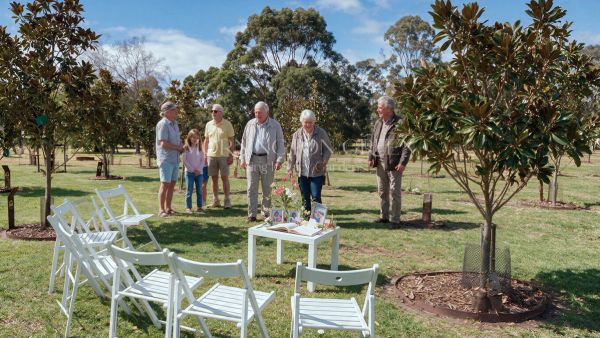
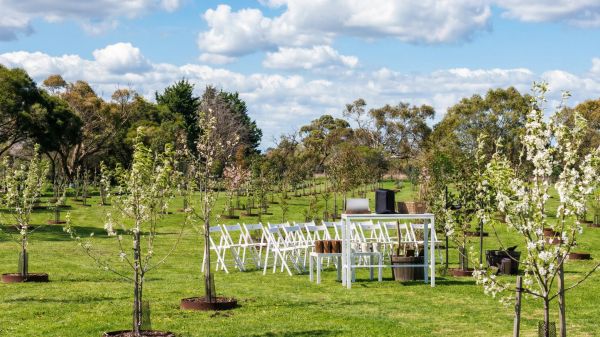
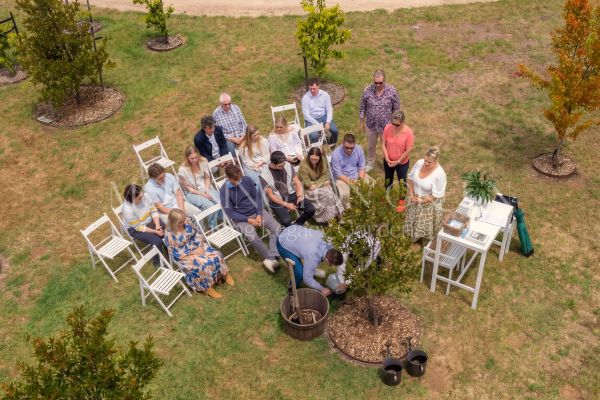
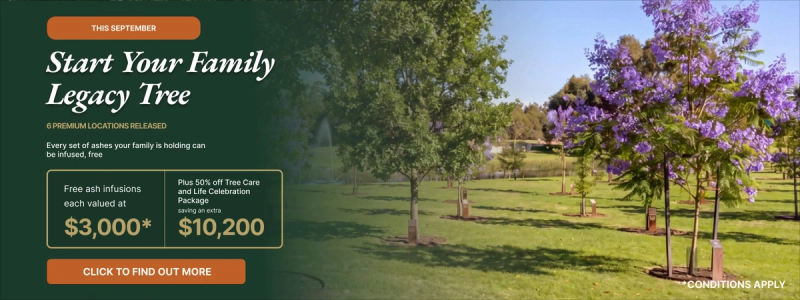
At Mornington Green Living Legacy Gardens in Somerville on the Mornington Peninsula, cremated ashes are treated using the Living Legacy Formula and incorporated into the root zone of a chosen tree during a ceremony. The tree absorbs the nutrients over approximately seven years and becomes fully self-sustaining.
The treatment matters. As explained in the article on whether human ashes are good or bad for soil, untreated ashes have a pH of around 12 and high sodium content. They damage plant roots rather than feeding them. The Living Legacy Formula adjusts the pH and converts the ash into something the tree can actually use.
The family chooses from 22 tree species. A bronze plaque is fixed to the tree. The garden is open year-round.
Two ways to plan:
- Pre-plan: a newly planted tree chosen during your lifetime, watched as it grows
- At-need: an established tree already in the garden, some up to five metres tall
Packages start from $8,000, all-inclusive. This covers:
- Ash treatment using the Living Legacy Formula
- A ceremony with catering for up to 15 guests
- A bronze memorial plaque fixed to the tree
- 2.5 hours use of Magnolia House
- Up to four hours of Legacy Planner time
Read more: Memorial Service vs Celebration of Life: Which Is Right for You?
"We wanted a place where it is peaceful and quiet, where we could celebrate Mum's life. My two children, who are still young, needed a place where they could hug Mum as a tree. Have a flower next to their bed at night." Nicole Taylor | Read more family stories
How the options compare
| Option | Body or ashes? | Legal in Australia? | What it produces | Fixed location? |
|---|---|---|---|---|
| Natural burial | Body | Yes (28 sites nationally) | Body decomposes into soil | Yes |
| Human composting | Body | No | Approx. 1 cubic metre of compost | No, compost is portable |
| Aquamation | Body | Yes (NSW, QLD, VIC, TAS, SA only) | Bone ash, same as cremation | Depends on what you do with the ash |
| Flame cremation | Body | Yes (all states) | Bone ash | Depends on what you do with the ash |
| Living Legacy Tree | Cremated ashes | Yes (operating since 2020) | A living tree with a named plaque | Yes, protected garden in Somerville, VIC |
For families weighing the environmental impact across these options, the memorial options after cremation in Melbourne guide walks through each one in more detail.
Ready to talk through your options?
If you want to understand whether a Living Legacy Tree is the right fit for your family, the team at Mornington Green is available at any stage of the process.
- Book an open day to walk the garden in person
- Watch family stories on video
- View the gallery
Call (03) 9059 4959 or visit morningtongreen.com.au.