

Water cremation, also known as aquamation or alkaline hydrolysis, is a process that uses warm water and an alkaline solution to break down the body's soft tissues, leaving only bone fragments behind. It can use around 90% less energy than flame cremation, produces no direct air emissions, and is growing steadily across Australia.
This guide explains how it works, costs, providers, and ash options afterward.
What Is Water Cremation?
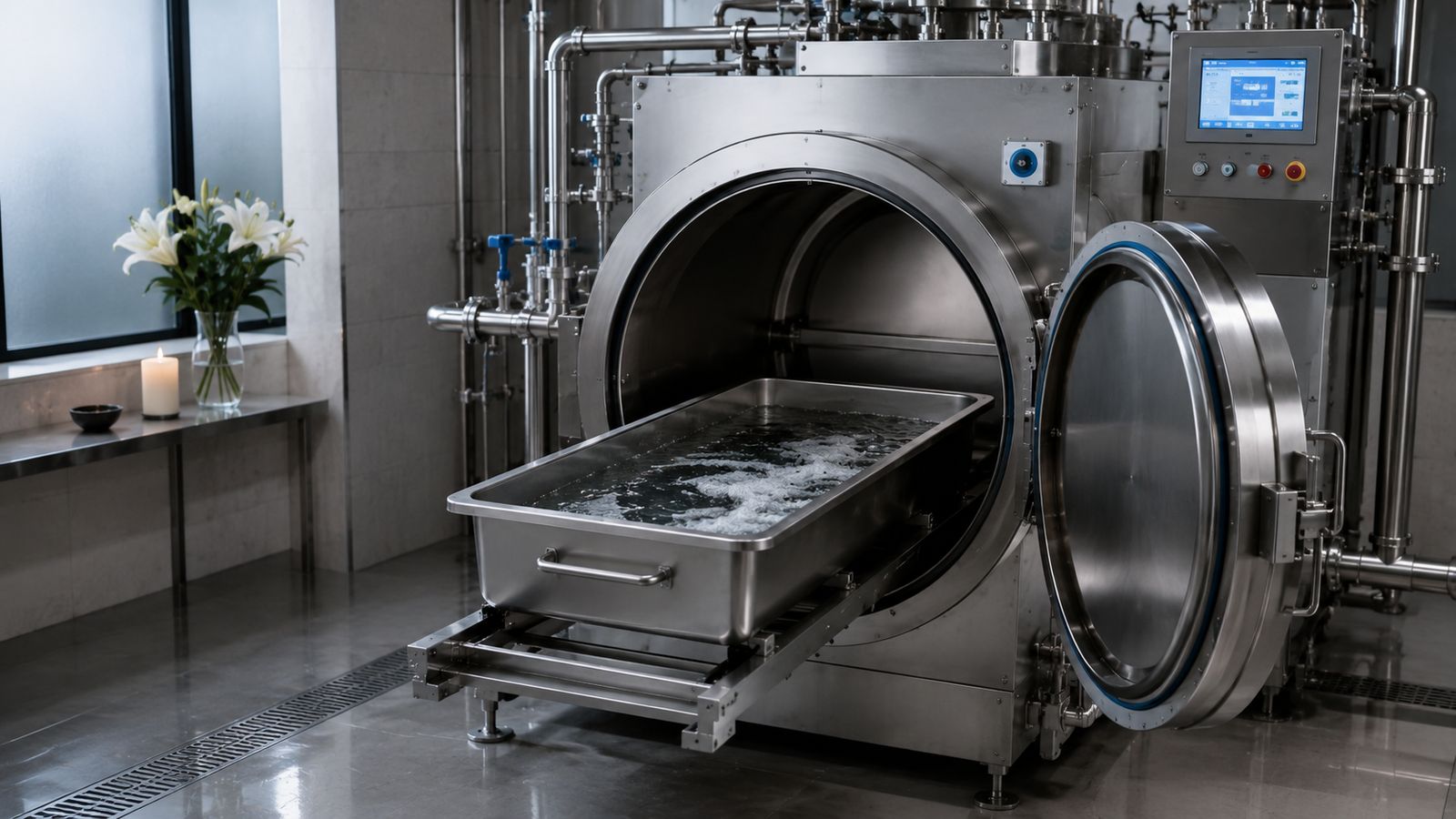
Water cremation accelerates the natural decomposition process that happens underground, but does it in a controlled chamber over four to twelve hours rather than decades. The body is placed in a pressurised stainless steel vessel filled with approximately 95% warm water and 5% potassium hydroxide.
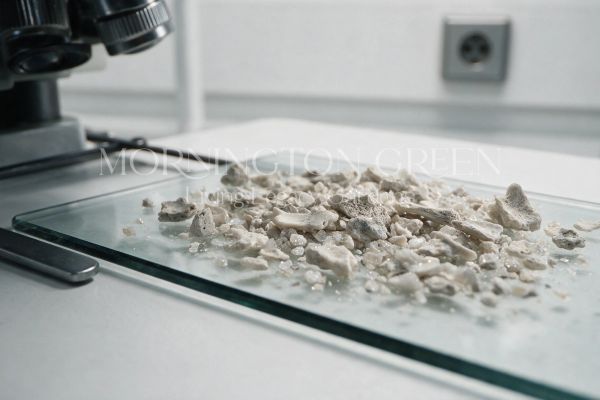
The bone fragments are removed, dried, and processed into a fine white powder. This is returned to the family in an urn, much like traditional cremation ashes. The liquid byproduct, once pH-adjusted to meet wastewater standards, is discharged through the sewer system or, in some cases, used as a soil additive.
The process is known by several names: aquamation, alkaline hydrolysis, bio-cremation, liquid cremation, resomation, and flameless cremation. All refer to the same process.
A Brief History of Water Cremation
The process was first patented in 1888 in England by Amos Herbert Hobson as a method to convert animal remains into plant food. It moved into scientific and veterinary use in the 1990s and became a commercial option for pet cremation in the early 2000s.
The first alkaline hydrolysis system designed for human death care was manufactured in 2005 by Bio-Response Solutions in the United States. The first human water cremation in Australia was performed in 2010 by John Humphries, who also coined the term 'Aquamation' that year.
Water cremation gained widespread public attention in December 2021 when Archbishop Desmond Tutu chose aquamation as his preferred form of final disposition, citing his commitment to environmental responsibility. That single choice generated more global awareness of the process than any industry campaign had managed in the previous decade.
How the Process Works: Step by Step

The process follows a consistent sequence, though duration and temperature vary slightly between low-pressure and high-pressure systems:
- The body is received from the home, hospital, aged care facility, or coroner's office. A unique identification number is assigned and the body is kept in refrigeration until preparation.
- Once legal paperwork and permits are in order, the body is prepared. Clothing is removed and the deceased is wrapped in a biodegradable shroud. Families can be present for the start of the process if they wish.
- The body is placed in a permanent metal basket inside a stainless steel chamber, which is positioned horizontally.
- The chamber is filled with water (approximately 95%) and potassium hydroxide (approximately 5%), measured according to the person's weight.
- The solution is heated and circulated through either a low or high pressure system.
- The alkaline solution breaks down proteins, fats, and soft tissues at the molecular level. The skeletal remains and any metal implants are unaffected.
- The liquid is drained into a holding tank, pH-adjusted, and discharged in accordance with local water authority requirements. Some providers use the liquid as a soil nutrient on plantation forests.
- Skeletal remains and implants are removed from the chamber and placed on trays to air dry completely.
- Once dry, the bone fragments are processed into a fine white powder. Metal implants are removed and recycled.
- The processed remains are returned to the family in an urn for memorialisation.
Is Water Cremation Legal in Australia?
Yes, but availability varies by state. As of 2026, water cremation for humans is offered across five Australian states, with limited or no availability in the remaining jurisdictions.
| State | Legal status | Notes |
|---|---|---|
| New South Wales | Legal and available | Multiple providers operating. Sydney Water levy of approximately $1,000 applies in some cases due to wastewater discharge requirements. Water cremation is explicitly recognised as a form of cremation under the NSW Cemeteries and Crematoria Act 2013. |
| Queensland | Legal and available | The Gentle Way operates in Townsville, Mackay, and Brisbane. One of the most active states for aquamation. |
| Victoria | Legal and available | Multiple providers including Australian Aquamation Funerals (based in Melbourne), Alluvium Water Cremations, and Bass Coast Funerals (Gippsland). |
| Tasmania | Legal and available | Alluvium Water Cremations, co-founded by Brendan Cooper and Luke Cripps, operates the only facility in Tasmania. Featured in SBS reporting, June 2025. |
| South Australia | Legal and available | Environmentally Friendly Cremations / Australian Aquamation Funerals serves Adelaide. |
| ACT | Available via NSW providers | No standalone facility, but families can access services through NSW-based providers. |
| WA / NT | Limited or not yet available | Legislation and provider availability remain limited as of 2026. Verify locally before planning. |
Regulatory frameworks vary by state. The key practical complexity in some areas, particularly NSW, is the wastewater discharge permit. Sydney Water has specific requirements for the effluent, which has led some NSW providers to use the liquid as plantation forest fertiliser rather than discharging it through the sewer system. NSW cemeteries and crematoria operators are regulated by Cemeteries & Crematoria NSW, the independent government agency that oversees licensing and standards.
Benefits of Water Cremation
Environmental benefits
Water cremation produces less than 10% of the carbon emissions of flame cremation, according to Australian Aquamation Funerals. Flame cremation releases approximately 160 kg of CO2 per body through the burning of natural gas and the combustion of body tissue. The alkaline hydrolysis process uses electricity rather than fossil fuels and produces no direct air emissions, including no mercury from dental fillings and no particulates.
Energy consumption is approximately one quarter of what flame cremation requires. The liquid byproduct is sterile and, once pH-adjusted, is safe for discharge or agricultural use. Metal implants, including titanium joints and pacemakers, are recovered intact rather than being destroyed, and can be recycled through dedicated programs.
Benefits for families
More remains returned: Water cremation yields approximately 20 to 30% more remains than flame cremation, according to Luke Cripps of Alluvium Water Cremations (SBS, June 2025).
Whiter, finer remains: The powder produced is typically whiter and finer than flame cremation ash, which some families find meaningful.
No pacemaker removal required: Flame cremation requires surgical removal of pacemakers before the procedure due to explosion risk. Water cremation does not.
Gentler process: The process mirrors natural decomposition. Many families find this conceptually easier than fire-based cremation.
Water Cremation vs Flame Cremation: A Comparison
| Aspect | Water cremation | Flame cremation |
|---|---|---|
| Process | Alkaline hydrolysis: water and potassium hydroxide | Combustion: natural gas at 800 to 1,000 degrees Celsius |
| Temperature | 93°C to 150°C | 800 to 1,000 degrees Celsius |
| Duration | 4 to 16 hours depending on system type | 1 to 3 hours |
| Energy use | Approximately 90% less than flame cremation | High; relies on natural gas |
| Air emissions | None; sealed process | CO2, mercury, particulates |
| Water use | Approximately 500 to 700 litres | None |
| Remains returned | White, fine powder; 20 to 30% more yield | Grey, coarser powder |
| Pacemaker removal | Not required | Required before cremation |
| Typical Australian cost | $3,500 to $8,200 (varies by state and provider) | $3,534 average direct; up to $8,045 attended (Australian Seniors, 2023) |
| Legal availability | NSW, QLD, VIC, TAS, SA (as of 2026) | All states and territories |
What Does Water Cremation Cost in Australia?
Water cremation costs more than direct flame cremation in Australia, primarily because the equipment is expensive and the number of providers is still relatively small. The process itself is energy-efficient, but the capital cost of the aquamation equipment is significant.
| Service / Provider | Approximate cost | Notes |
|---|---|---|
| Direct water cremation (national average) | $3,500 to $6,000 | No ceremony. Transfer, legal paperwork, and return of remains included. |
| Alluvium Water Cremations (TAS/VIC) | $4,400 to $6,000 | All-inclusive: transfer, paperwork, personal return of remains. 24/7 availability. |
| Australian Aquamation Funerals (NSW, VIC, SA, QLD, ACT) | Enquire directly | Also trades as Environmentally Friendly Cremations. Sydney Water levy approximately $1,000 additional in NSW. |
| NSW full service (incl. Sydney Water levy) | Up to $8,200 + GST | Published pricing from Australian Aquamation Funerals / Environmentally Friendly Cremations. |
| The Gentle Way (QLD) | Enquire directly | Townsville, Mackay, Brisbane. Focuses on eco-system water management. |
| Bass Coast Funerals (VIC, Gippsland) | Enquire directly | Regional Victoria. |
| Comparison: direct flame cremation | $3,534 average nationally | For context. Source: Gathered Here, December 2025. |
The price difference between water cremation and direct flame cremation in Australia is typically $1,500 to $3,000 depending on location.
5 Things Most Water Cremation Guides Do Not Cover
1. The wastewater permit problem in NSW
Every guide mentions that water cremation is available in NSW, but one aspect that receives less attention is the practical complexity: Sydney Water has strict requirements for the effluent discharged from the alkaline hydrolysis process. The pH must be adjusted and tested before discharge is permitted. Some providers have found it easier to use the liquid as fertiliser on plantation forests than to navigate the wastewater permit process. This is why some NSW operators list a 'Sydney Water levy' of approximately $1,000 on top of the base service fee. Understanding this before choosing a provider avoids unexpected costs.
2. The remains look and feel different, and that matters to some families
Every article mentions that water cremation produces more remains, but none of them explain what that actually feels like for the people grieving. The powder returned is whiter and finer than flame cremation ash. Some families find this significant. It looks less like ash and more like a fine white powder. For families planning to use the remains in a Living Legacy Tree, a memorial reef, or a piece of jewellery, the consistency difference may affect which option they choose. Providers can discuss this before the process begins.
3. Not all water cremation systems are the same: low pressure vs high pressure
Australian guides treat water cremation as a single process. In practice, there are two main system types. Low-pressure systems operate at approximately 93°C and take 10 to 16 hours. High-pressure systems operate at 150°C and take 4 to 6 hours. The results are similar, but processing time differs. Families who want the process completed quickly, for example to allow a ceremony within a specific timeframe, should confirm which system type the provider uses before booking.
4. The liquid byproduct is not hazardous, but its disposal is regulated
A common concern families raise is what happens to the liquid after the process. The short answer is that it is sterile and safe. At the end of the process, the liquid has a pH of approximately 11. Providers cool it, adjust the pH down to meet municipal standards (typically around pH 9 to 10), and then discharge it through the wastewater system or use it as agricultural fertiliser. It contains no harmful pathogens. The DNA of the deceased is completely disintegrated during the process. Families do not need to worry about the liquid containing identifiable biological material.
5. Ashes from water cremation can be used in the same ways as flame cremation ashes
No Australian guide addresses what families can actually do with the remains after water cremation. The answer is everything that is possible with flame cremation ashes: keep them in an urn, scatter them at a meaningful location (subject to local regulations), incorporate them into a Living Legacy Tree at Mornington Green, turn them into a memorial diamond or piece of jewellery, or bury them. The consistency of water cremation remains, being finer and whiter, makes them particularly well suited to incorporation into living memorials where soil chemistry matters.
What to Do With the Ashes After Water Cremation
Keep them at home
There is no legal requirement in Victoria or most other Australian states to inter, scatter, or otherwise dispose of cremated remains. Families can keep them at home indefinitely. Many do, particularly in the weeks and months following the death. For some families, having a permanent home for the ashes eventually becomes important.
Scatter them
Scattering is legal in many contexts across Australia, though there are restrictions on scattering in public waterways, national parks, and some council-managed land. The relevant state government authority can advise on approved locations. If the ashes will be scattered at sea, scattering ashes does not require a permit under the federal Environment Protection (Sea Dumping) Act 1981, though a full burial at sea does. The Australian Maritime Safety Authority recommends scattering at least three nautical miles from shore.
Incorporate them into a Living Legacy Tree
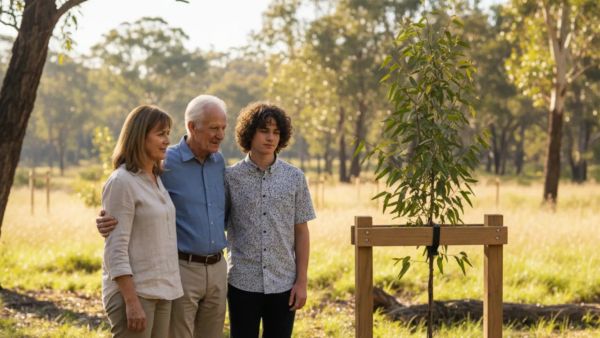
At Mornington Green Living Legacy Gardens in Somerville, approximately 60 kilometres from Melbourne CBD, ashes from both flame cremation and water cremation can be incorporated into a living tree using the Living Legacy Formula. The formula treats the ashes to make them available as stable nutrients for the tree.
Pre-plan trees are newly planted at the time of selection and grow over subsequent years. At-need trees are already established specimens, some up to five metres tall, chosen after a death has occurred. Both options create a lasting memorial within a protected garden setting.
Other memorial options
Memorial diamonds, compressed ashes turned into glass art, memorial reefs placed in the ocean, and space launches are all commercially available for cremated remains in Australia. Each provider has its own requirements about how much ash they need and how it should be prepared, so it's best to check that everything will work before you choose one of these options.
Read more: Top 6 Memorial Options After Cremation in Melbourne
Choosing the Right Memorial After Water Cremation
Water cremation returns ashes to the family in roughly the same way as flame cremation. The decision about where those ashes go is separate and does not need to be made at the same time as the cremation itself.
For families who want a permanent place to come back to, a living memorial tree is worth considering alongside the other options. Families interested in a living memorial can visit the garden or contact the team to learn more about the available tree species, memorial options, and costs.