

Most Australian families now choose cremation. Around 68% do, according to the Australian Seniors Cost of Death Report. After that decision, though, comes another one that often catches families off guard. What do we actually do with the ashes?
This guide walks through the main directions Melbourne families take, what each involves, and what they cost. It is written for people who want a meaningful answer, not just a quick one.
How Australian Funeral Choices Are Changing
Cremation has overtaken burial as the default choice in Australia, and the gap keeps widening. Cost is part of the reason. The Australian Seniors Cost of Death 2.0 Report put the average basic burial at around $11,039 in 2023, with some basic burial packages running as high as $18,652. A basic direct cremation lands much lower, up to roughly $5,953, while a standard cremation with a service averages around $8,045.
Cost alone is not the whole picture, though. Families increasingly want a memorial the next generation will actually return to. That has driven a clear shift away from rows of headstones toward living, growing memorials and natural settings.
Six Memorial Options for Melbourne Families
1. Living Legacy Trees
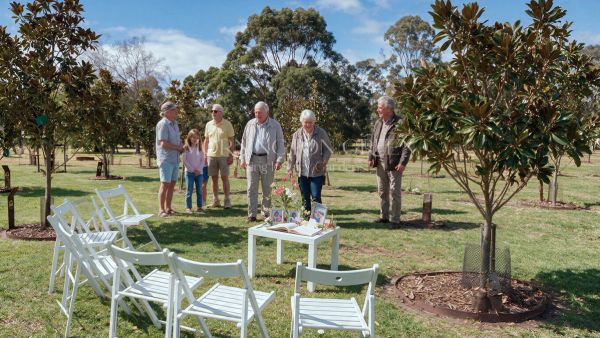
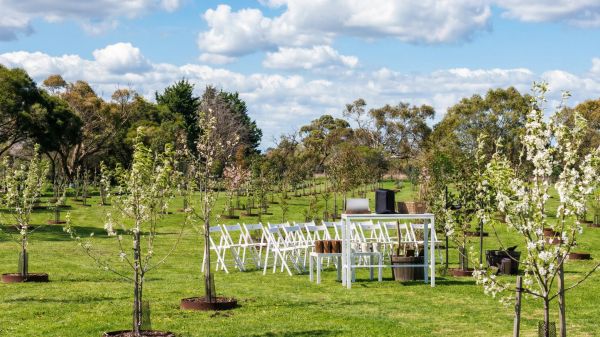
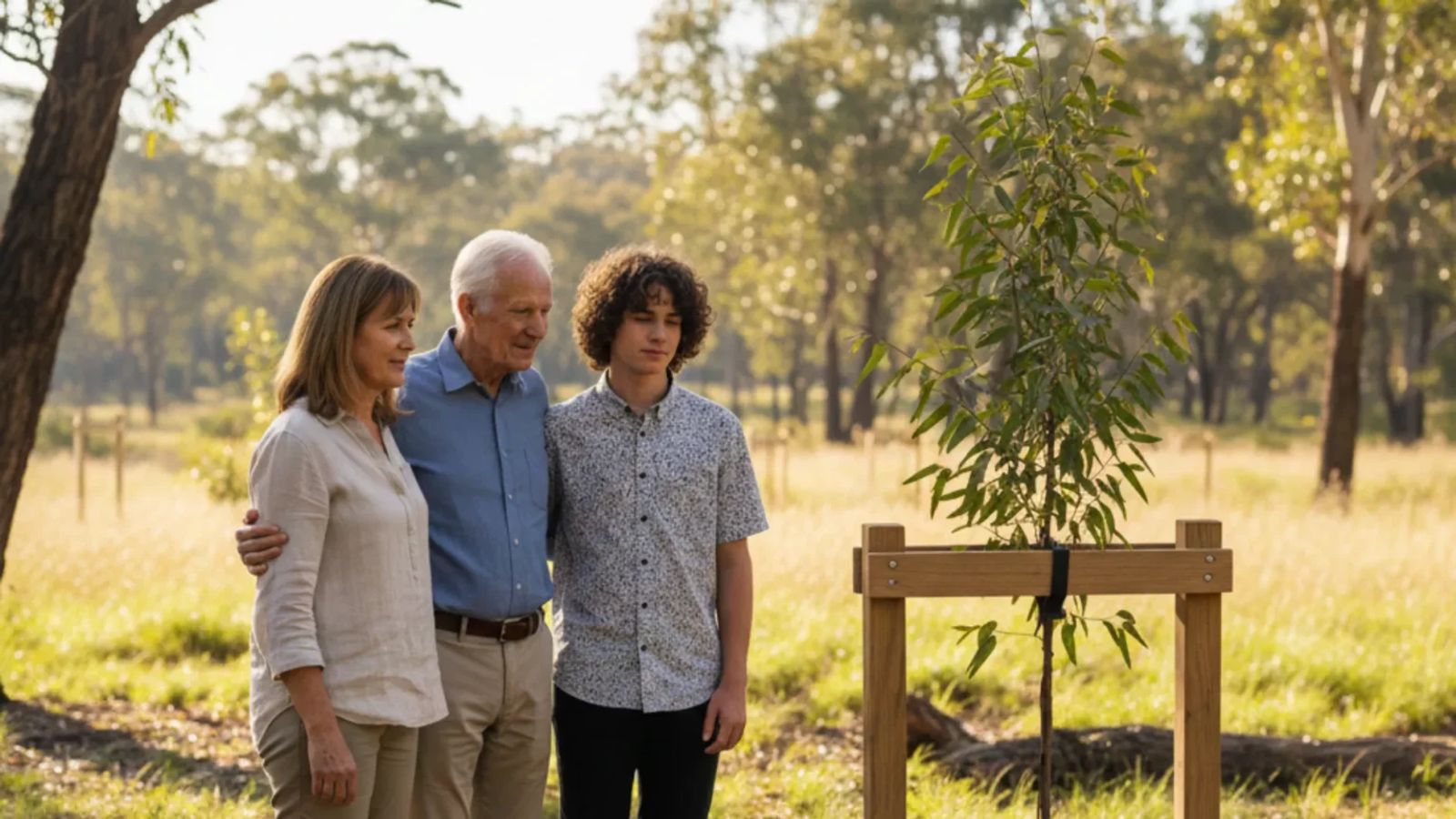
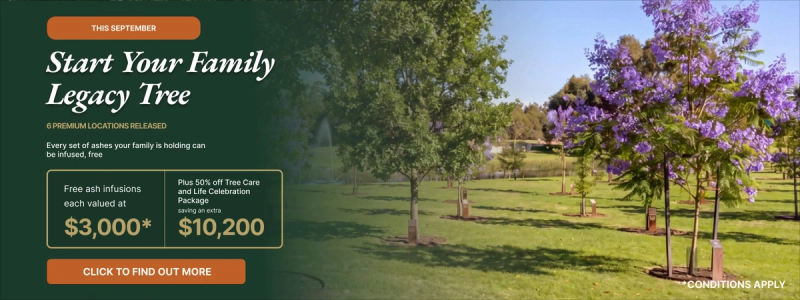
A Living Legacy Tree converts cremated ashes into nutrients that feed a real tree planted in a protected garden. At Mornington Green Living Legacy Gardens, located 52 km south of Melbourne CBD in Somerville, families can choose from native and ornamental species and visit any time.
The science is what separates this from simply burying ashes near a tree. Untreated ashes are alkaline, salt-heavy, and harmful to plant roots. To turn them into something a tree can actually use, the ashes have to be chemically processed first. Mornington Green uses a patented Living Legacy Formula that neutralises the harmful elements and releases plant-ready nutrients into the root zone.
Why families choose this option:
- A living memorial that grows over decades
- A peaceful, visit-anytime location to gather
- Care of the tree is included for the life of the gardens
- Lower lifetime cost than traditional cemetery burial
For more on the species available, see the types of memorial trees we plant, or read how the process works step by step.
Cost: From $[VERIFY current published price]. Includes perpetual care with no future fees.
2. Memorial Flower Gardens
Some families prefer a memorial that blooms rather than one that grows tall. Flowers Forever, also at Mornington Green, places treated ashes beneath a seasonal flowering bed. The visiting experience is similar to a tree memorial, but the visual is closer to a cottage garden.
Cost: Available on enquiry.
3. Public Memorial Gardens
Several public gardens around Melbourne have memorial sections. George Tindale Memorial Gardens in the Dandenong Ranges and Alfred Nicholas Memorial Garden in Sherbrooke are two well-known examples maintained under Parks Victoria stewardship.
The trade-off with public gardens is that you have a lovely place to visit, but the memorial is shared. Most do not permit ashes to be interred on-site without specific permits, and there is no private location bound to your loved one.
Cost: Free to visit. Plaque programs vary by site.
4. Scattering Ashes
Scattering at a meaningful location, a beach, a bushland walk, or somewhere personally significant, is the most affordable option and a powerful one for many families. It does come with rules. Public land in Victoria generally requires permission from the relevant land manager. Beaches, rivers, and parks each have separate guidelines, and scattering on private property needs the owner's consent.
There are practical considerations too. Untreated ashes can damage soil and plant life when released in volume. The chemistry is covered in our guide to treating human ashes in Australia.
Cost: Free, plus any required permits.
5. Keeping Ashes at Home
Many families choose to keep the urn at home, either permanently or while they decide what to do next. Victoria has no legal time limit on this. The main thing to plan for is the long term, especially if the family later moves house or downsizes.
Cost: Price of the urn itself.
6. Memorial Jewellery and Keepsakes
A small portion of ashes can be set into rings, pendants, or fused glass artwork. This is usually paired with one of the other options above rather than used on its own, since it gives each family member a personal keepsake while the main memorial sits elsewhere.
Cost: Varies widely by piece.
Read more: Memorial Service vs Celebration of Life: Which Is Right for You?
Cost Comparison Snapshot

A Victorian death certificate is required for most arrangements. It costs $57.50 as of 1 July 2025 and can be ordered through bdm.vic.gov.au.
Funeral cost figures source: Australian Seniors Cost of Death 2.0 Report.
How the Living Legacy Tree Process Works
For families choosing a memorial tree at Mornington Green, the steps are straightforward.
1. Select a tree. The choice includes natives like Flowering Red Gum, Bottlebrush, Lemon Scented Gum, Golden Wattle, and Flame Tree, alongside other Australian species. Each has different growth habits, flowering seasons, and final size.
2. Treat the ashes. Ashes are processed through the patented Living Legacy Formula, which neutralises alkalinity, removes the salts that would otherwise harm roots, and converts the remaining minerals into a form trees can absorb.
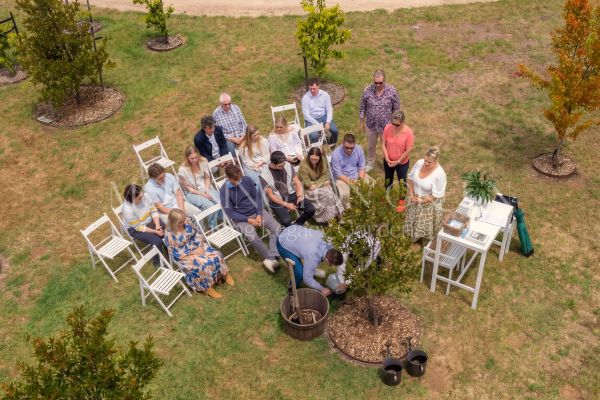
3. Plant and dedicate. Treated ashes are placed at the root zone of the chosen tree, which is then planted in its permanent location. A bronze plaque marks the spot.
4. Visit. Families can return any time. The tree is cared for by horticulturists for the life of the gardens.
The full process is set out here.
Choosing What Suits Your Family
A few practical questions usually help narrow it down.
How often will family actually visit? A memorial 90 minutes from home that nobody travels to feels less meaningful than something closer, even if the closer option is simpler.
Who looks after it long term? Public gardens are maintained by their managing body. Private memorial gardens like Mornington Green include perpetual care. Scattering requires no maintenance, but there is also no fixed point to return to.
What suits the person you are remembering? Someone who loved bushwalking might suit a native tree memorial. Someone who lived for their garden might suit a flower memorial. Someone tied to the ocean might suit a sea scattering with a small keepsake kept at home.
What do you want to leave the next generation? A Living Legacy Tree will outlive everyone making the decision today. A scattering is a single moment. Both are valid, but they answer different questions.
If you are pre-planning for yourself rather than arranging for someone else, our green funeral planning guide covers what to think about and how to lock in current prices.
Frequently Asked Questions
Which memorial option is most affordable after cremation? Scattering ashes is the lowest-cost path, since there is no product to buy beyond any required permits. Among permanent memorials, keeping an urn at home is cheapest. A Living Legacy Tree costs more upfront but includes perpetual care, so there are no future fees to pass on.
Can I plant a memorial tree in my own backyard? Technically yes, but untreated ashes will damage the tree because of high pH and sodium content. If you go this route, the ashes need to be treated first. The other thing to consider is that the memorial is tied to the property. If you sell the home, the memorial stays behind.
How far is Mornington Green from Melbourne CBD? Mornington Green is in Somerville, around 52 km south of Melbourne CBD. The drive via the Mornington Peninsula Freeway takes about an hour.
Is there a deadline to decide what to do with ashes? No. There is no legal deadline in Victoria. Ashes can be held at the crematorium or kept at home indefinitely while the family decides. Many families take weeks or months, which is completely normal.
Can one tree memorial be shared by multiple family members? Yes. A single Living Legacy Tree can serve as a family memorial for partners, parents, and pets together. See our family memorial tree page for more.
Are biodegradable urns a good alternative? They are popular, but most contain untreated ashes that can still harm soil and roots once the urn breaks down. Several memorial gardens, including Mornington Green, do not accept biodegradable urns for this reason. Treating the ashes first is what changes the outcome.
Visit Mornington Green
The clearest way to decide if a Living Legacy Tree fits your family is to walk through the gardens in person. Book a tour or read what other families have shared about their experience.