

A celebration of life honours someone who has died, separate from the funeral itself. It has no fixed format, so the real task is making a run of practical decisions rather than following a template.
This guide works through those decisions, and what to weigh up at each one.
What is a celebration of life
A funeral is usually tied to the body and to legal or religious requirements, so it tends to happen soon after the death. A celebration of life isn't. It doesn't need the body or ashes present, a set timeframe, or a religious structure.
Some families hold it instead of a funeral. Others hold a small funeral first, then a celebration of life later, once there's time to plan something more personal. Both are common.
Start by deciding who it's for. A gathering for close family only will look very different from one open to everyone the person knew, and that answer drives most of the decisions below.
Read more: Simple guide to memorial services, celebrations of life and funerals
Choosing when to hold it

There's no deadline, so the question is what you're waiting for, if anything.
- Soon after the death, while everyone's already gathered for the funeral. Less coordination and travel, but you're planning it during the hardest week.
- A month or two later. Gives you time to plan properly and gives distant family time to arrange travel.
- On a meaningful date, such as a birthday or the anniversary. Useful if the family wasn't ready earlier, or held a private cremation first and wanted more time before anything public.

If part of the day is outdoors, pick the date with the season in mind rather than hoping the weather holds.
Choosing the right venue

Match the venue to your guest numbers, how private you want the day to be, and whether you need a weather backup.
Home or backyard
- Best for a small, close group where privacy matters more than space.
- Nothing to book, and the most personal setting.
- No weather backup unless there's covered outdoor space, so it's a risk once the group gets too big to move indoors.
Park, reserve or beach
- Good for an open-air, informal gathering, especially for someone who loved the outdoors.
- Most Victorian councils require a permit for gatherings over a certain size, and the threshold and process differ by council, so check with the specific council before setting a date.
- Has the same weather risk as a backyard, without a fallback room to move indoors.
Hired function room, club or pub
- Makes sense once the guest list is too large for a home or park to hold comfortably.
- Removes the weather risk and usually includes tables, catering and a bar.
- Less personal, and can feel like a corporate event if the room isn't set up to suit the occasion.
Garden or memorial setting
- Suits a smaller, more reflective gathering where the setting itself matters.
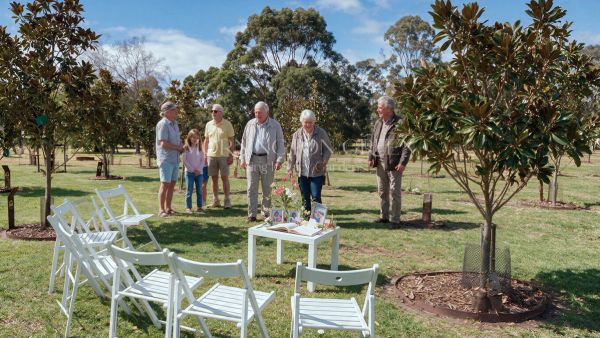
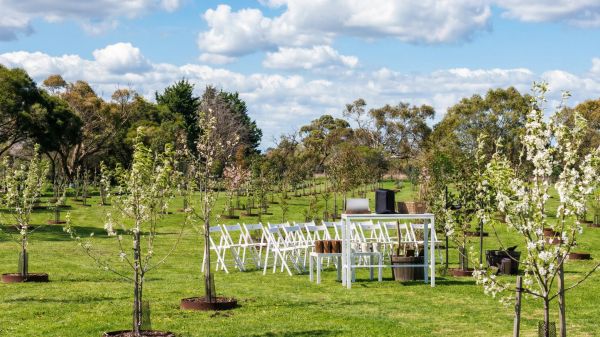
- Some venues connect the day to a permanent memorial on the same site, so the gathering and the resting place aren't two separate decisions later on. Mornington Green's Life Celebration Package is one example, pairing the ceremony with the planting of a memorial tree.
Whatever you choose, plan a wet-weather backup if any part of the day is outdoors, and check step-free access if older guests are attending.
Deciding who will lead the day
The choice comes down to how much the family wants to run themselves, versus how much they want handled for them.
Civil celebrant
- Shapes the ceremony and writes the tribute, so no grieving relative has to also run the day.
- Fees depend on the celebrant and how much preparation the ceremony needs, so ask for a quote rather than assuming a fixed cost.
- Makes sense for a larger or more formal gathering, or when no one in the family feels able to lead it.
Family member or close friend
- Free, and keeps the day personal.
- Only works if that person can hold the room while also grieving, which isn't always realistic.
- Some families split it: one person handles logistics and welcomes guests, another leads the ceremony.
No formal leader
- Fine for a small, informal gathering.
- Someone still needs to open the day, watch the time, and signal when it's winding down, or it tends to drift.
Whoever leads it, have a backup speaker in mind in case the first choice finds the day too hard.
Planning the ceremony and speakers

Fewer, longer speeches usually work better than many short ones. Two tributes of three to five minutes each, from people who knew the person well, land better than six shorter ones that repeat the same stories.
An open floor, where anyone can stand and share a memory, adds warmth but needs light management. Without someone watching the time, it runs long, which matters if the venue has a fixed booking window or older guests are standing.
If some family members can't attend, decide early whether to record the day or set up a simple livestream, rather than arranging it last minute.
Many celebrations of life run 60 to 90 minutes for the formal part, then open time for people to talk. A simple order:
- Arrival and refreshments.
- A short welcome from whoever's leading the day.
- One or two prepared tributes.
- Open floor for anyone who wants to speak.
- A shared moment, such as a toast, music, planting something, or scattering ashes.
- Close, then informal time.
Making it feel personal
The logistics matter, but what people remember is usually smaller and simpler than the running order.
- Play music the person loved, either as guests arrive or during a quiet moment in the ceremony.
- Display photographs, printed or on a screen, so people have something to look at and talk about while they arrive.
- Ask a few people to prepare short stories rather than formal eulogies. A specific memory often lands better than a general tribute.
- Read something they wrote or loved, such as a favourite poem, a letter, or their own words if they left any.
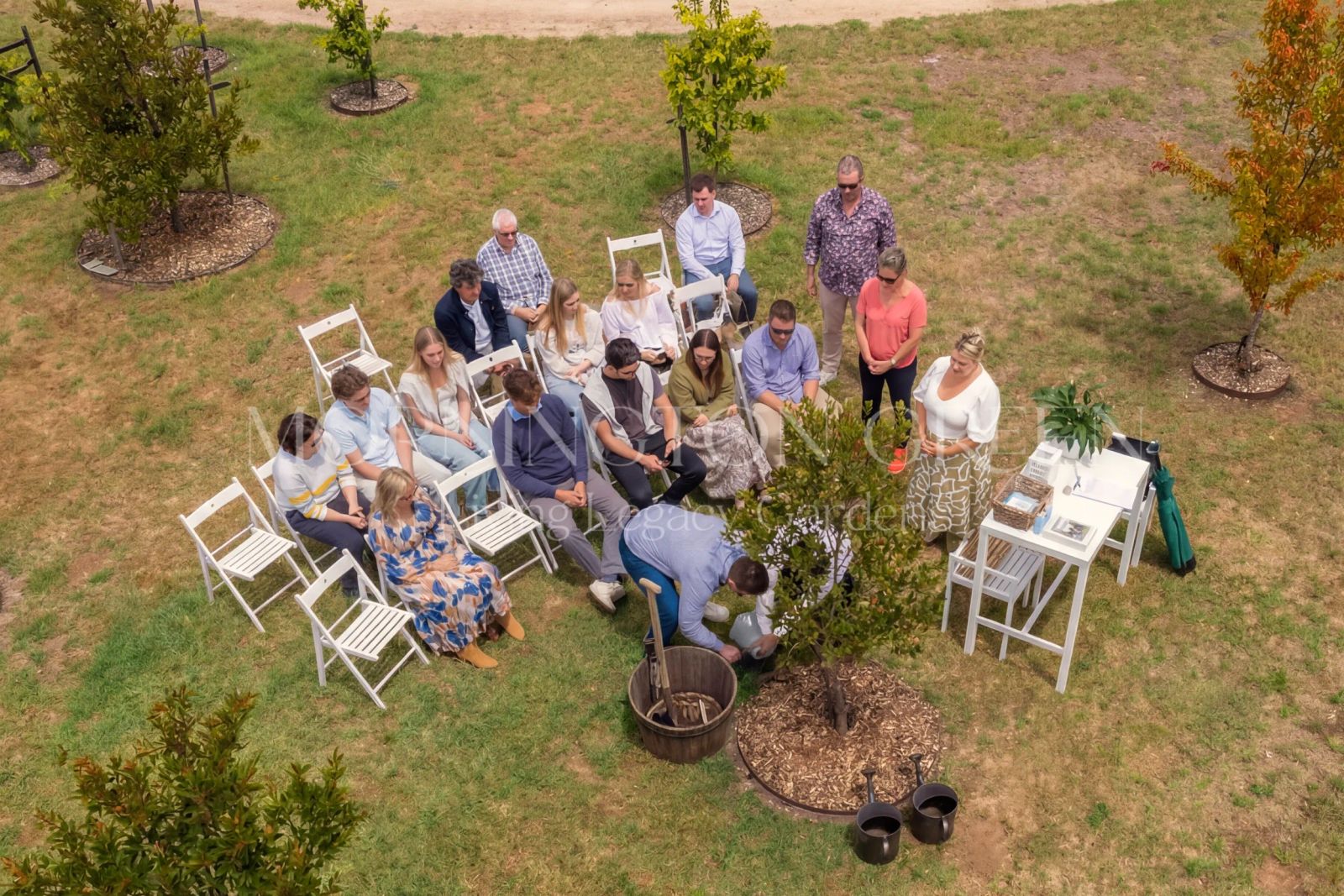
- Include one shared activity, like planting something, lighting candles, or scattering ashes together, so the day has a moment everyone takes part in rather than just watches.
You don't need all of these. One or two, chosen because they suit the person, usually says more than trying to include everything.
Understanding the costs
A celebration of life usually costs less than a funeral, since it doesn't carry funeral director, coffin or cremation fees. Budget for it in four parts.
- Venue. A home costs little beyond cleaning and setup. A park or reserve may only need a permit fee. A function room or garden venue sets its own rate, whether flat, hourly, or per guest.
- Celebrant, if you use one. Fees depend on experience and preparation time, so ask for a quote directly.
- Catering. Scales with guest numbers and style, from simple refreshments to a sit-down meal. The easiest cost to adjust by changing the guest list or menu.
- Optional extras. Flowers, printed order of service, keepsakes, or a shared activity. Add only what feels meaningful for the person, not everything on the list.
Get quotes from the actual venue, celebrant and caterer you're considering. A general figure from the internet won't reflect your guest numbers or location.
Deciding what to do with the ashes

Many families plan a celebration of life while still holding the ashes, without having decided what happens next. The celebration doesn't need to settle that question. Plenty of families hold the gathering first and decide later.
- Keep the ashes at home. Common for families who aren't ready to decide, or who want to keep them close.
- Scatter the ashes. Broadly permitted on public land in Victoria, though requirements can differ by council and by land manager. Scattering on private property needs the landowner's permission, so check the specific location first.
- A cemetery plot or memorial niche. The traditional option for a fixed place to visit.
- A living, permanent memorial. The ashes become part of a planted tree or garden instead of a headstone, for families who want a place that grows over time.
Some families don't want to plan the celebration and the final resting place as two separate events, months apart.
Living Legacy Gardens at Mornington Green, offers a Life Celebration Package built around this: the gathering happens in the gardens alongside the planting of a Living Legacy Tree, so the ceremony and the resting place are the same event.
It works alongside the family's chosen funeral director, who still handles the cremation. Schedule a call to see whether it fits what you have in mind.
A simple planning checklist
- Agree a date, with the season and weather in mind if part of the day is outdoors.
- Decide whether it's close family only or open to everyone the person knew, since this shapes the venue and catering.
- Choose who leads the day and who delivers the main tribute.
- Confirm the venue and any permit requirements, and arrange a wet-weather backup.
- Settle on two or three speakers and a rough running time.
- Pick one or two personal touches, such as music, photos or a shared activity.
- Book catering and confirm numbers close to the date.
- Arrange recording or a livestream if some family can't attend in person.
- Decide whether the ashes are part of the day, or a decision for later.