

Most people who look this up saw something on social media. A short video of an egg-shaped pod, a tree sapling, and a caption about turning a person into a tree. It looked exactly like what they wanted. So they started searching, and the picture got complicated fast.
What tree pod burial actually is

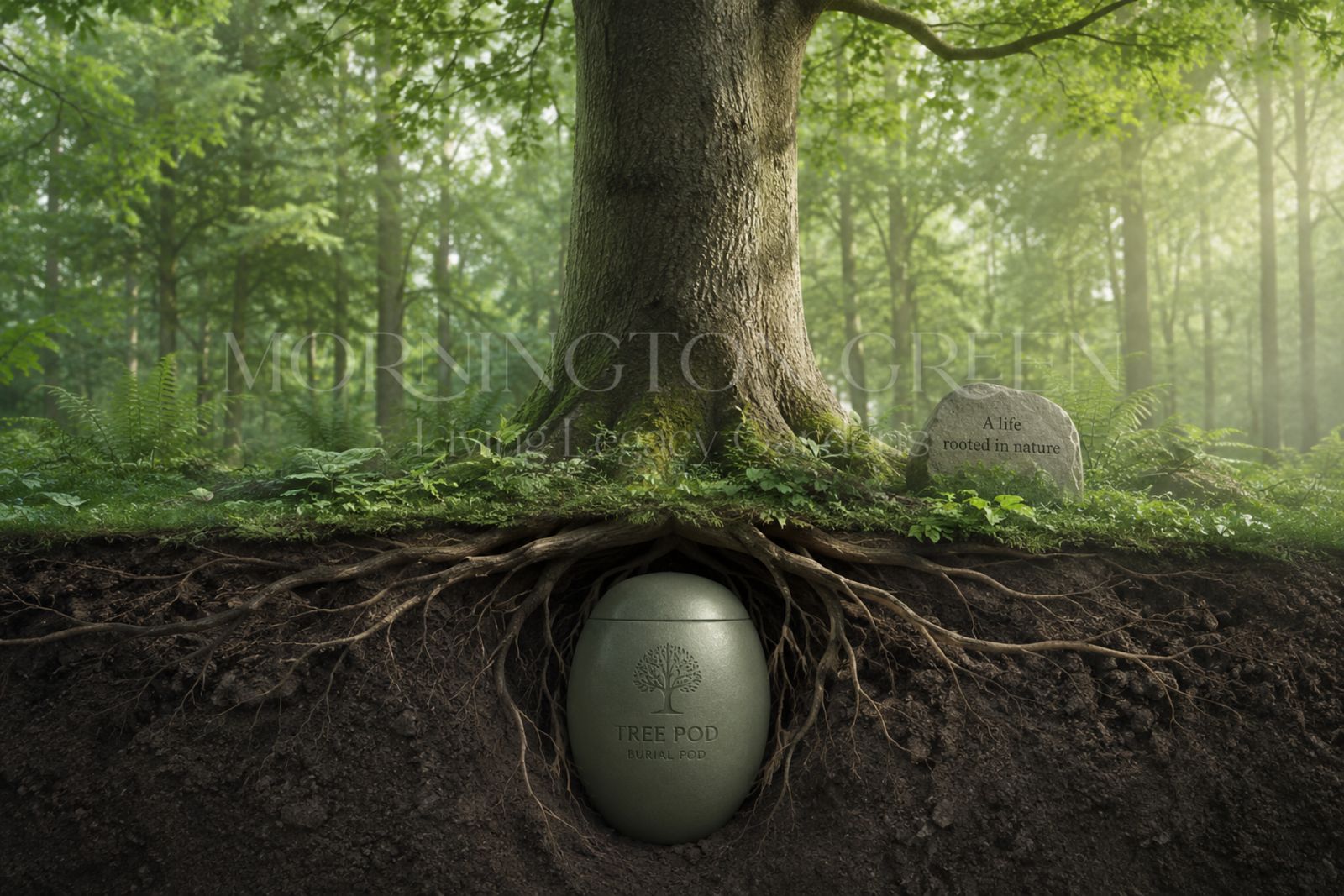
The concept was created by Italian designers Anna Citelli and Raoul Bretzel through a project called Capsula Mundi. The idea is simple: a person's remains go inside a biodegradable pod, the pod is buried underground, a tree is planted above it, and as the pod breaks down it feeds the soil around the roots.
That is the idea. Here is what exists in practice:
- The full-body version (a person placed in a fetal position inside a large pod) has never been commercially offered anywhere in the world. Capsula Mundi states on their own website that the body pod is still in development and is not ready for the market.
- The ashes version (a small biodegradable urn for cremated remains) does exist and is sold commercially, including in Australia.
So when people search for tree pod burial, they are almost always talking about the second version: placing cremated ashes in a biodegradable urn and burying it near a tree. That distinction matters, because the science around whether that actually works is where the problems begin.
Why tree pod burial is not widely available in Australia
There are three separate problems, and they all hit at once.
1. The legal situation
Burial law in Australia sits with the states, and each one bans burial outside authorised sites without written approval. This is about bodies, though. Cremated ashes are a different legal animal, and that difference is the whole story here.
In Victoria, the Cemeteries and Crematoria Act 2003 makes it an offence to bury a body anywhere but a public cemetery without the Health Department Secretary's written approval: 600 penalty units or five years in prison, or both. Approval basically never happens unless there are already marked graves on the land.
In NSW, you can bury a body on private land, but only if the property is at least five hectares and the local council signs off.
In South Australia, the Burial and Cremation Act 2013 makes burying a body anywhere but an authorised cemetery or natural burial ground an offence.
None of that applies to ashes. Victoria's own health department says flat out there's no impediment to burying cremated remains on private property. NSW's five-hectare rule is for bodies. Ashes just need the landowner's okay. South Australia allows scattering or burying ashes on private land with the owner's permission, no permit required.
So no, a tree pod burial isn't illegal on land you own. What you won't find is a cemetery that offers it as a service, and that's not a legal gap. It's because cemeteries know what happens next.
2. The environmental problem with untreated ashes
Here's the bit the pod companies skip over.
Ashes aren't compost. They're calcified bone, cooked at around 1,000°C, and what comes out is a fine grey powder with a pH around 12, bleach territory, plus a heavy dose of sodium.
Against tree roots, that doesn't feed a tree. It damages it. Since pH is logarithmic, 12 against normal soil's 7 works out to about 100,000 times more alkaline, not a million like some sources claim, but still enough to harm most root systems on contact. That is why industry lab tests link direct contact with such a high rate of seedling loss.
The pod does not change the ash chemistry itself. Based on the pH and salt levels described above, once the pod breaks down the ash underneath is likely to remain just as alkaline as before. That means a tree planted next to it may still struggle to establish, even though the pod itself has fully decomposed.
3. The practical problem
Set the legal and chemical stuff aside for a second. Most people don't think past the day of purchase.
A pod on your own land only works as long as that land stays yours: no sale, no development, no clearing. A pod at a natural burial ground only works as long as that site stays open and keeps tending the tree. Almost nowhere guarantees ongoing care. That's on the family, indefinitely.
Where tree pod burial is available in Australia

Nowhere, as a service. Only for ashes, and only if you do it yourself on land you own.
You can buy the pod. The Living Urn ships to Australia and has sold here since 2019. Capsula Mundi is the other well-known brand, though it's Italian and mainly ships from Europe. Either way, no Australian cemetery installs these for you. You buy the pod, you bury it yourself, on your own property.
The tree's survival after that depends on the pH problem in point two, not on anything to do with legality or location.
The science: why untreated ashes and trees do not mix
Most trees need a soil pH of around 5 to 6 to grow well. Human cremated ashes have a pH of 12, which is roughly one million times too alkaline for healthy tree growth.
Alongside the pH problem, untreated ashes contain:
- Around two cups of salt, which blocks photosynthesis and water absorption
- High concentrations of calcium phosphate with no organic material
- No nitrogen, potassium, or other nutrients trees can absorb
The bacteria and fungi that cycle nutrients through healthy soil cannot operate at pH 12. When they die off, the soil loses its ability to support new life, sometimes for years.
This is why placing ashes in a biodegradable urn does not solve the chemistry problem. The urn breaks down. The ashes do not change. The ash chemistry leaches directly into the surrounding soil as the pod decomposes, which concentrates the damage in a small area rather than dispersing it.
What Victorian families are doing instead
Because pod burial is not practically available and untreated ashes do not support tree growth, families who want a living memorial tree have moved to a different approach: treating the ashes first, then infusing them into the soil of a specific tree in a protected garden.
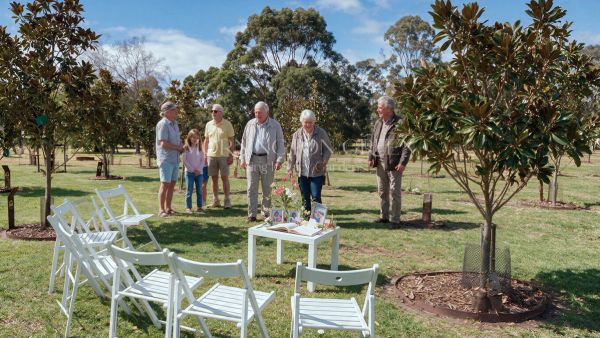
At Mornington Green Legacy Gardens in Somerville on the Mornington Peninsula, cremated ashes go through the patented Living Legacy treatment before anything goes in the ground. The process was developed by Dr. Mary Cole and involves four stages:
- pH balancing: Brings the pH from 12 down to 6 to 7, a range trees can actually use
- Salt reduction: Reduces sodium levels to stop them blocking water absorption
- Nutrient conversion: Converts the mineral content into nitrogen, potassium, and other compounds trees absorb through their roots
- Microbial boost: Introduces beneficial microorganisms to support healthy soil biology
The treated material goes under the roots of the chosen tree. Over time, the calcium, phosphorus, and minerals move up through the root system into the trunk, branches, and leaves. The person is not beside the tree. They are inside it.
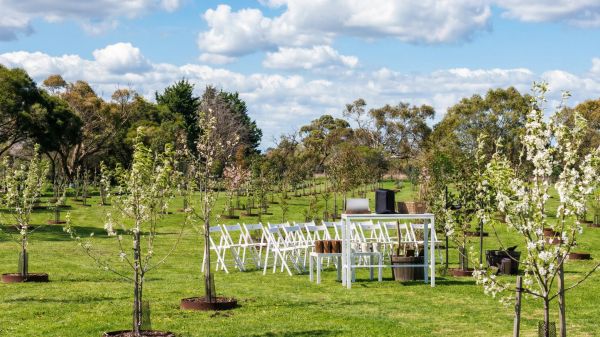
The garden is protected by a conservation covenant, meaning the land cannot be sold or redeveloped. Trees are maintained permanently by Mornington Green's horticulture team with no ongoing fees to the family. Families can visit any day of the week.
To understand what the Living Legacy Tree process looks like from start to finish, including the ceremony and what is included, the process page covers every step.
How the costs compare
| Option | Upfront cost | Does the tree survive? | Long-term care |
|---|---|---|---|
| Biodegradable pod urn | $250 to $600 for the urn only | Depends on ash treatment. Untreated ash chemistry can harm seedlings | No care included |
| Natural burial site with urn | Varies, often unlisted | Depends on site rules and ash treatment | Site-dependent |
| Living Legacy Tree at Mornington Green | From $8,000 including GST | Yes, scientifically supported | Permanent, no annual fees |
| Traditional burial in Melbourne | Average $19,000 | No living memorial | Ongoing cemetery fees apply |
The urn cost is lower upfront, but it does not include finding a legal burial location, and it does not address whether the tree will actually survive. At Mornington Green, the package covers the ash treatment, the tree, the planting ceremony, and permanent site care. There are no annual fees after that.
Families researching ahead of time can find full pricing and package details on the pre-plan page.
Common questions
Can I bury a tree pod in my backyard?
In most Australian states you can bury cremated ashes on private property, including in a biodegradable urn. Whether the tree survives depends on the ash chemistry. Untreated ashes at pH 12 in direct contact with roots will damage or kill most trees. You would need to treat the ashes first, and always check local council rules before proceeding.
Is tree pod burial legal in Australian cemeteries?
Very few allow it. Most cemetery trusts require burial in approved coffins or within designated plots. Natural burial sites like Walawaani Way in NSW have more flexibility, but each site has its own specific rules. Always ask in writing before assuming anything is permitted.
What makes the Living Legacy process different from a standard pod burial?
The core difference is what happens to the ashes before they touch the soil. In a pod burial, untreated ashes go into a biodegradable container. The urn decomposes; the ash chemistry stays the same and can damage the surrounding soil for years. In the Living Legacy process, the ashes are treated before infusion. The Living Legacy treatment is patented and is now used by Centennial Park Adelaide and Metropolitan Cemeteries NSW, not just Mornington Green.
Can more than one person's ashes go into the same tree?
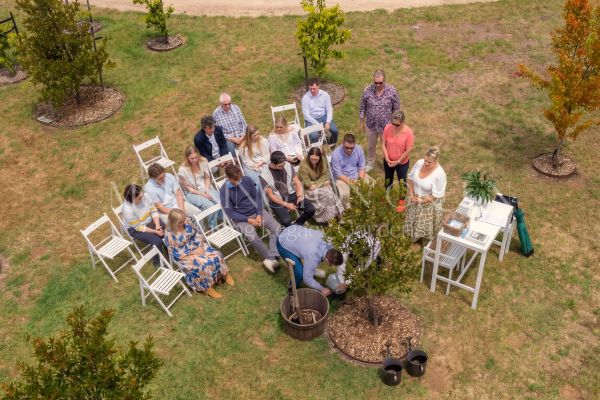
Yes. At Mornington Green, up to two sets of ashes can be placed with the same tree over time. This is common for couples or families who want a shared memorial. You can learn more about this through the family memorial service.
I already have ashes at home. Can I still do this?
Yes. Many families come to Mornington Green with ashes stored at home for months or years. The Living Legacy treatment works on cremated remains dating back to the 1960s. There is no time limit. Contact the team and they will guide you through the process from there. Families in this situation can read about the at-need service for a clear picture of how it works.
What about pet ashes?
Mornington Green treats and infuses pet ashes using the same process. Pet ashes can go with the same tree as a person, or into a separate tree. There is a dedicated pet memorial service for families in this situation.
Taking the next step
If you are researching this before you need it, attending an Open Day is the simplest way to see the garden, understand the tree options, and ask questions in person. Open Days include a walk through the grounds and time with the team.
If you already have ashes and need to move, call Mornington Green on (03) 9059 4959. The process from first call to ceremony typically takes around four to six weeks.
For families in Western Australia, Wellington Dam Living Legacy Forest near Bunbury uses the same patented ash treatment in a native forest within Wellington National Park.
Contact Mornington Green to begin a conversation, or download the brochure from the homepage to see tree varieties and pricing before making any decision.